
Planting Trees That Survive: Our Custodian Model
Across Pakistan, well-intentioned tree plantation drives often struggle because saplings are planted without water access, protective fencing, or local ownership. Jamila Welfare Foundation designed our Go Green Plantation Programme around long-term survival rather than one-day photo ops.
Before planting a single sapling, our field team confirms three essentials:
- Right Species for the Soil: Selecting indigenous, drought-tolerant shade and fruit trees (Neem, Moringa, Peepal, Amaltas, and Ber) suited to local urban and rural soils.
- Named Local Custodian: Partnering with a school administration, mosque/community committee, or farming household that pledges regular watering.
- Post-Plantation Follow-Up: Conducting quarterly survival checks and replacing any lost saplings during the first 12 months.
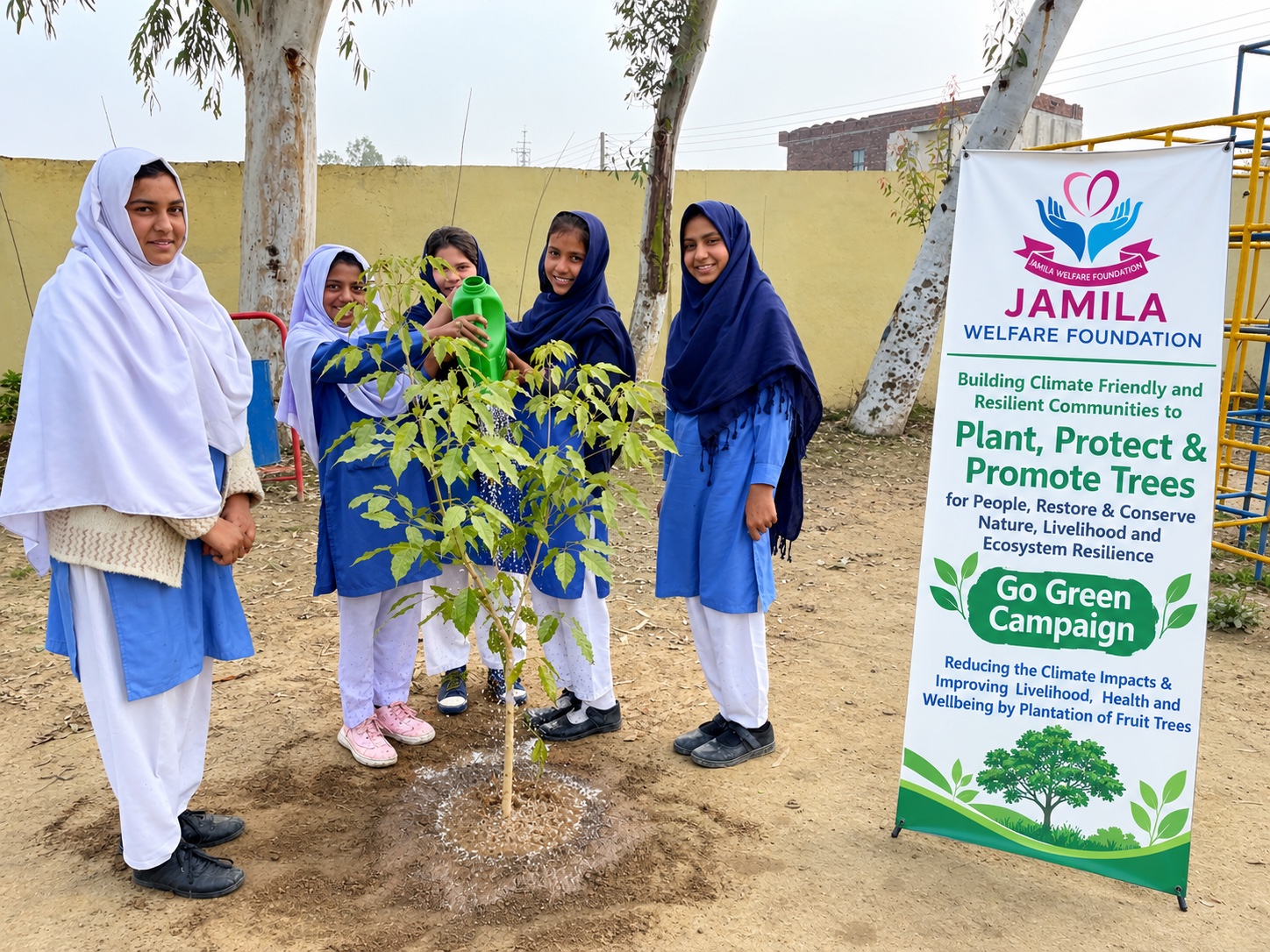
Three Community Plantation Priorities
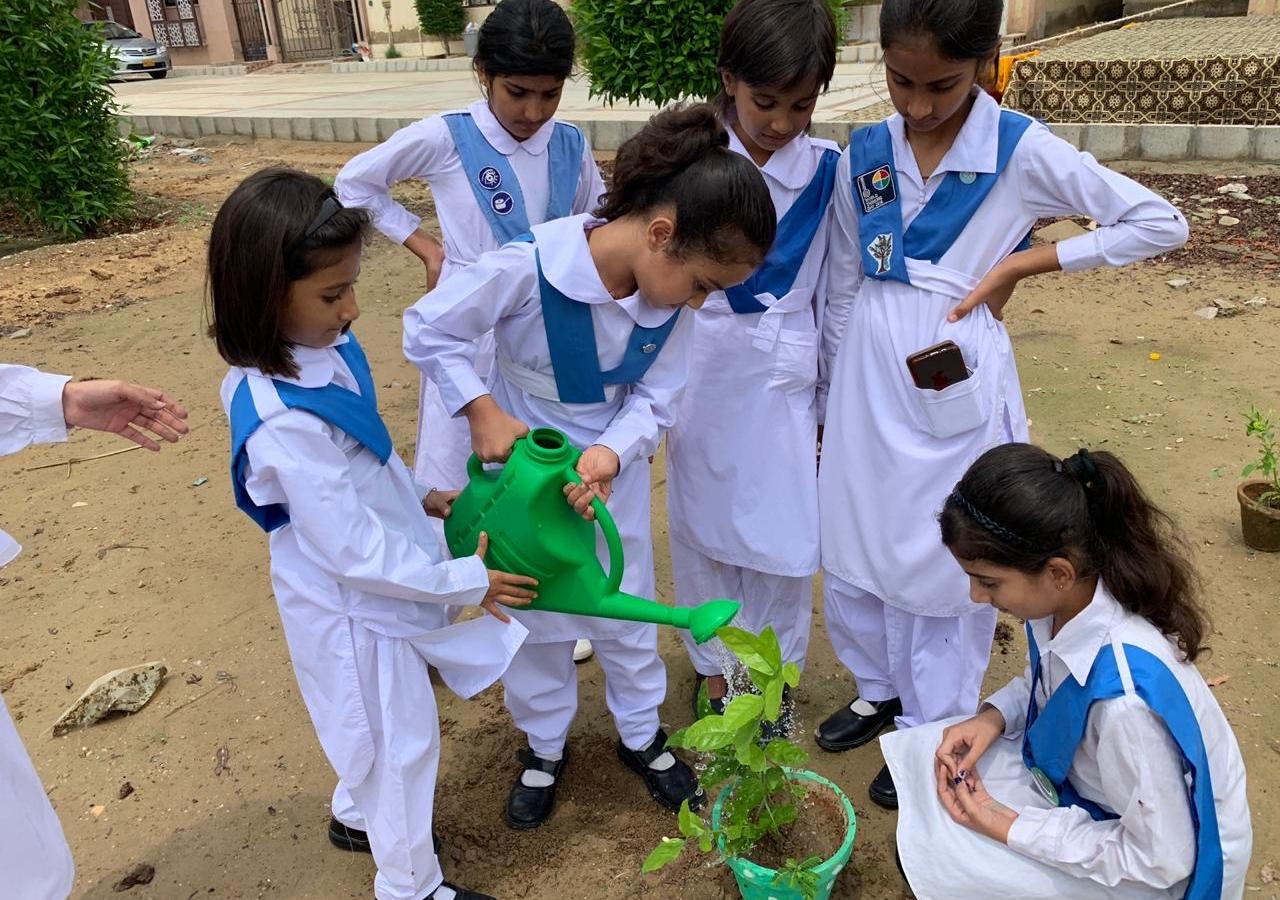
Urban & School Canopy Drives
Planting Neem, Amaltas, Peepal, and Sukh Chain across schools, hospital grounds, and residential streets in Karachi to combat urban heat islands and dust pollution.
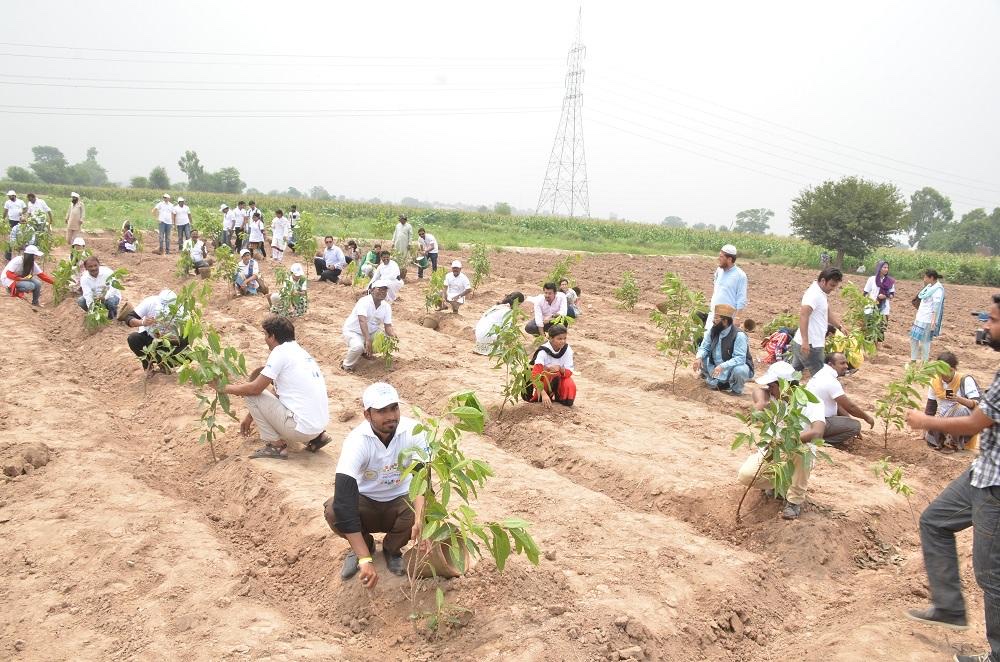
Rural Shelterbelts & Fruit Trees
Distributing Moringa (Sohanjna), Ber, Guava, and Lemon saplings to rural families to provide household nutrition, windbreaks for crops, and soil stabilization.
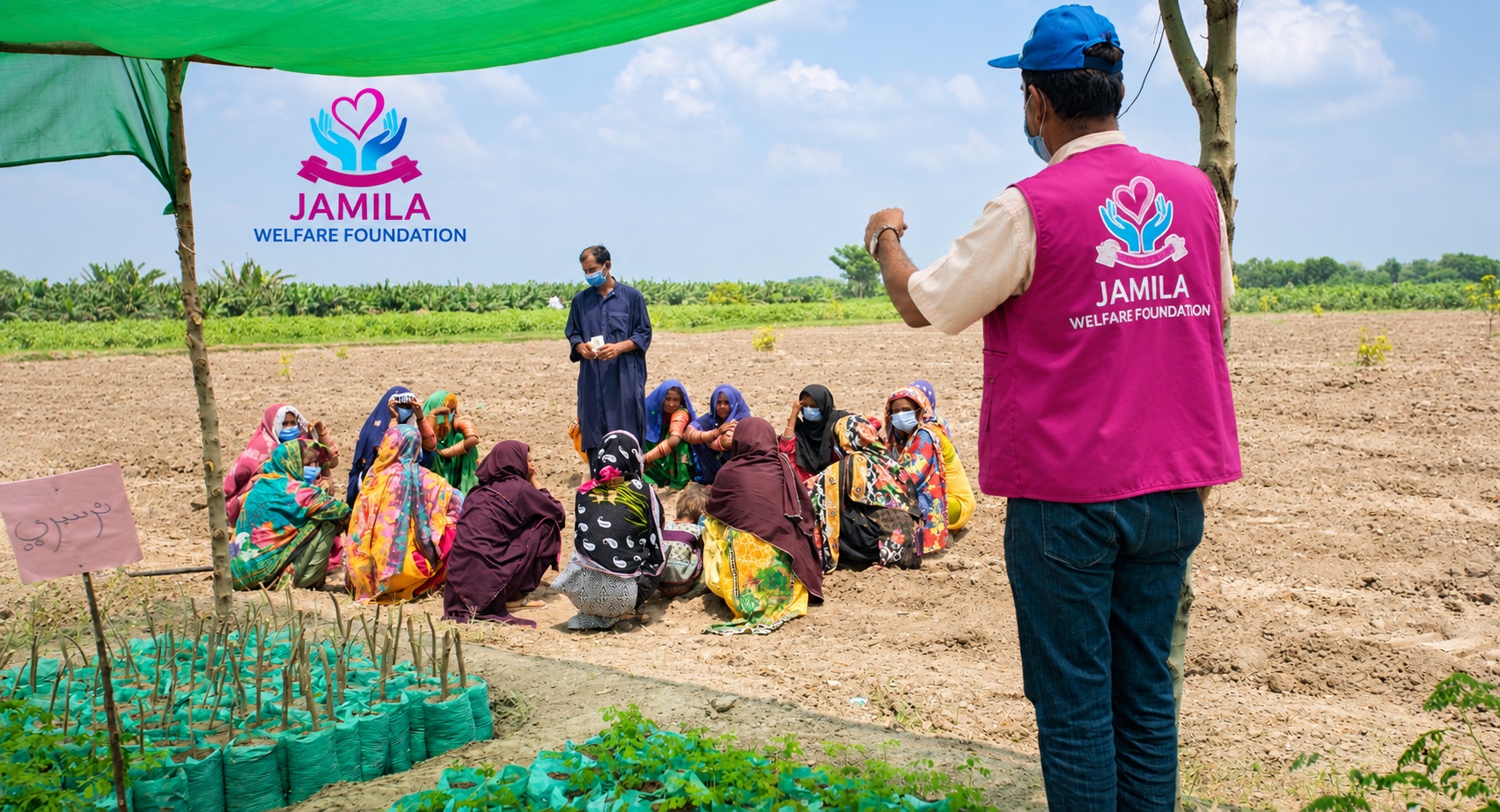
Community Parks & Local Nurseries
Partnering with neighbourhood committees and women-led community nurseries to propagate native saplings and green public parks, clinic courtyards, and community pathways.